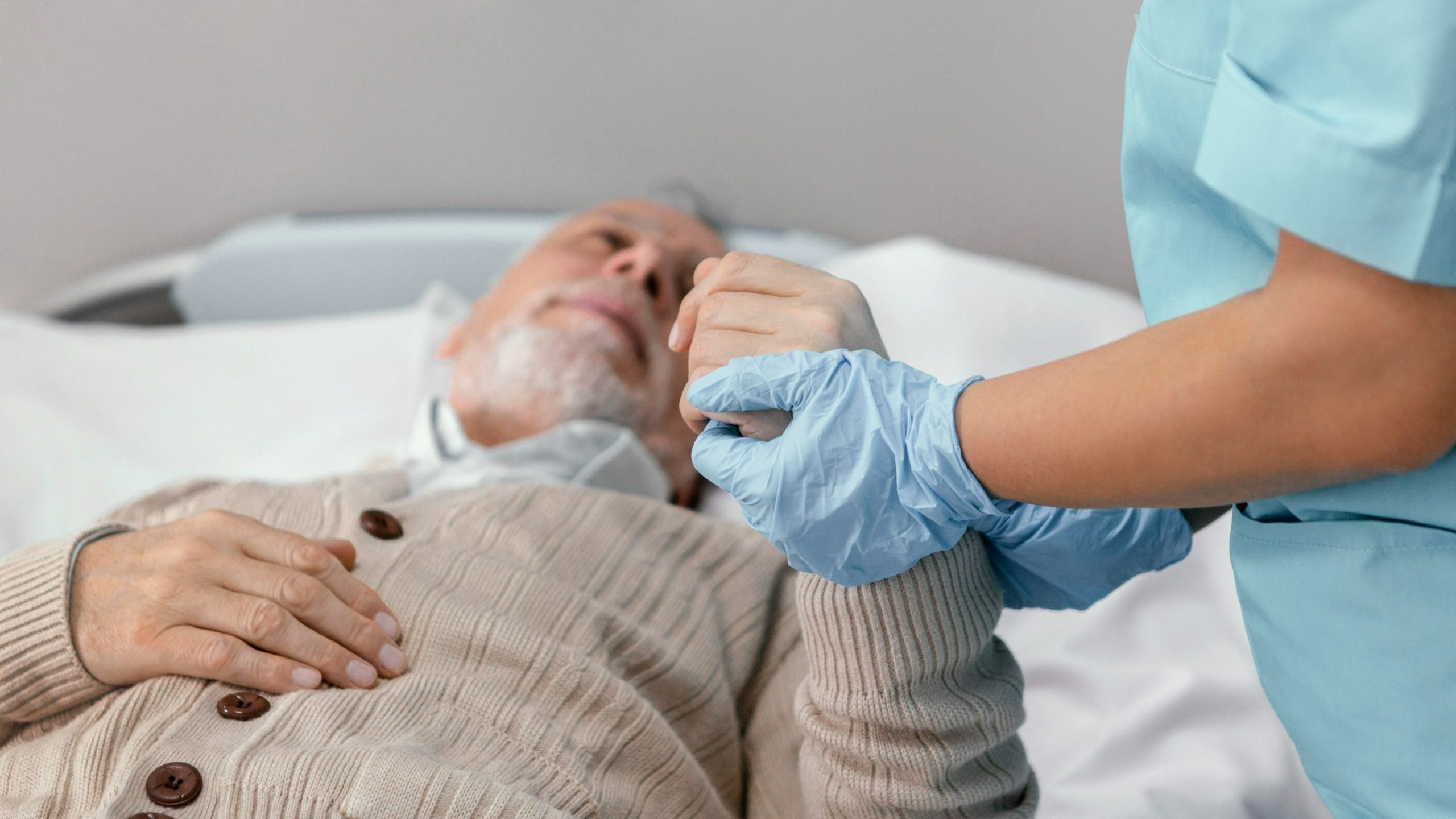
A stroke is not a “wait and see” illness. It is a medical emergency caused by blocked blood flow to the brain or bleeding inside the brain, and the first decisions belong in hospital — scan, clot management, blood pressure control, swallowing assessment, prevention of another stroke. No oil massage, no kashayam, no Panchakarma should delay that. That is not caution for the sake of caution. It is the line between recovery and avoidable damage.
The place for Ayurveda begins after the acute danger has been assessed and the patient is medically stable. That is where the real work often starts. Not dramatic work. Repeated work. Sitting balance. Shoulder protection. Bowel correction. Sleep. Tone reduction. Hand opening. Gait practice. Mood. Food that does not worsen sugar, pressure, cholesterol or digestion. Families in Kerala know this stage well: the discharge summary comes home, the patient is alive, everyone is relieved, and then the house discovers how difficult one step, one bath, one night’s sleep can become.
Ayurveda describes stroke-like paralysis under Pakshaghata, usually discussed within Vata disorders. The practical reading is useful. Vata is movement, nerve conduction, dryness, depletion, irregularity, tremor, stiffness, loss of coordination. In post-stroke patients, that language often fits what is seen at the bedside: one side heavy or weak, joints cold or stiff, sleep broken, bowels irregular, speech strained, fear sitting quietly in the room. Modern neurology speaks of damaged brain tissue, neuroplasticity, motor relearning, spasticity and compensation. Ayurveda speaks through Vata, obstruction and tissue weakness. Both can be used sensibly, provided nobody pretends they are the same system.
Ayurveda Treatment For Stroke should not be sold as a cure. It should be planned as long rehabilitation.
The common mistake is chasing “nerve regeneration” as though a damaged wire can simply be reconnected. Brain recovery is not that tidy. Some functions return because swelling settles. Some return because surviving brain networks take over work. Some return because the patient repeats a task until the nervous system finds a new route. Some never return fully. Good treatment respects that uncertainty. False confidence is cruel in stroke rehabilitation.
The therapies most often used are not random spa treatments. They need sequencing.
Ayurvedic Therapies Used in Stroke Rehabilitation
Abhyanga, done with medicated oils, is usually the gentlest entry point. In a weak patient it is not about luxury massage. The pressure should be thoughtful. The shoulder on the paralysed side is vulnerable; pulling the arm to “loosen it” can cause pain that lasts months. The wrist and fingers may look tight, but forcing them open during oil therapy can trigger more spasm. Warm oil, slow direction, supported positioning, attention to skin folds, careful turning. That is treatment.
Swedana, or controlled fomentation, can help stiffness, heaviness and coldness in selected patients. But heat is not harmless. A patient with reduced sensation may not report burning. A diabetic foot may not tolerate aggressive heat. A patient with unstable blood pressure may feel exhausted after procedures that look mild from outside. Kerala families sometimes ask for stronger steam because “sweating removes toxins”. No. More sweating is not better rehabilitation.
Pizhichil, Njavarakizhi and Shashtika Shali Pinda Sweda are commonly chosen when weakness, wasting and stiffness coexist. They can be useful when the patient is stable enough to tolerate longer handling. The rice bolus therapies are often misunderstood. Their value is not only warmth. There is nourishment, rhythmic sensory stimulation, soft tissue relaxation, a kind of repeated body mapping. A limb ignored by the brain after stroke needs safe sensory input. Not rough stimulation. Not slapping. Not painful rubbing.
Basti is often treated as the central Panchakarma approach in Vata-dominant paralysis. In practice, mild oil enemas or more structured decoction-based Basti may be considered depending on strength, digestion, age, bowel pattern and medical status. Published Ayurvedic case reports on Pakshaghata commonly describe combinations such as Snehana, Swedana, Basti, Shirodhara, internal medicines and physiotherapy, but case reports are not the same as strong clinical proof.
That distinction matters.
The phrase Detoxification treatment in Kerala is used too loosely now. A post-stroke patient is not a healthy wellness traveller looking for seasonal cleansing. Virechana may suit a selected patient with good strength, good digestion and a clear indication. It may be a poor choice in a frail patient, a dehydrated patient, someone with poor intake, uncontrolled diabetes, recent hospital instability, kidney disease or severe weakness. Treatment that drains the patient in the name of detoxification can delay rehabilitation.
Nasya is another therapy that needs judgement. It is often discussed for head, neck, speech and nervous system disorders. But after stroke, swallowing difficulty, coughing, aspiration risk and reduced alertness must be checked first. NICE guidance for stroke rehabilitation stresses early screening for swallowing, communication, movement, continence, hydration and nutrition, because missed swallowing problems can lead to serious complications.
Shirodhara can be valuable when sleep, anxiety, irritability or restlessness dominate the recovery picture. It will not make a paralysed hand suddenly open. It may help the patient settle enough to participate in therapy the next morning. That is not small. A stroke patient who sleeps badly, fears falling, resists movement and becomes agitated during exercises will recover poorly even in a well-equipped centre.
Combining Ayurveda and Physiotherapy
Ayurveda Treatment For Stroke works best when it is not isolated from physiotherapy. I disagree with the advice that the patient should “complete Ayurveda first, then start exercise”. Delay is expensive. Brain and body both learn from repetition. Current stroke rehabilitation guidance recommends needs-based rehabilitation for at least three hours a day on five days a week where the person can participate, covering physiotherapy, occupational therapy and speech and language therapy.
The better model is combined care. Oil therapy before physiotherapy may reduce stiffness enough for better movement practice. Physiotherapy after Abhyanga may use that window for sitting, standing, weight shift, reaching, gait training or hand activity. Speech therapy should not wait because the patient is undergoing Panchakarma. Occupational therapy should not wait because the family is hoping the hand will recover by itself. Eating, dressing, toileting and transfers are not “small things”. They are the patient’s life.
The cases that go wrong often follow a pattern.
The family protects the patient too much. The weak arm is left hanging. The patient is fed in bed when sitting would be possible with support. Walking is attempted without ankle control. The knee snaps back every step. The shoulder starts hurting. Constipation is ignored for four days. The patient becomes afraid to move. Then everyone says the stroke is severe.
Sometimes it is severe. Sometimes the rehabilitation is careless.
Safety, Assessment and Patient Selection
Any centre offering Ayurveda Treatment in Kerala for stroke recovery should ask for the discharge summary, MRI or CT findings, medicines, blood pressure records, sugar levels, swallowing status, seizure history, cardiac history and current functional ability before planning treatment. A standard oil list is not a treatment plan. “Fourteen days package” is not a neurological assessment.
Medication conflicts deserve more attention. Stroke patients may be taking antiplatelets, anticoagulants, statins, antihypertensives, diabetic medicines, anti-seizure drugs or antidepressants. Herbal medicines should be prescribed by a qualified physician who knows the current drug list. Families should not add powders bought from shops because someone said they are good for nerves. In stroke recovery, the margin for error is thin.
Food is usually discussed badly. Too much restriction weakens the patient. Too much feeding worsens sugar and sleep. A post-stroke diet in Kerala cannot be copied from a wellness brochure. Rice quantity, kanji, fish, coconut, salt, pickle, fried snacks, evening tea, banana, jaggery preparations, diabetic control — all need adjustment. Protein is often inadequate, especially in elderly patients who eat small portions. Constipation is common. Dehydration is common. Silent swallowing difficulty is more common than families realise.
Ayurvedic Panchakarma Munnar searches usually bring up beautiful hill-centre promises. Munnar’s climate may suit some patients, especially those needing a quieter environment, but travel itself can exhaust others. Long road journeys soon after discharge, vomiting on the ghat road, missed medicines, pressure sores from sitting too long, poor toilet access — these are not minor issues. For Ayurveda Treatment in Munnar, the first question should not be room category. It should be medical readiness.
Ayurveda Treatment For Stroke is most useful when goals are specific. “Make him normal” is not a goal. “Sit for 20 minutes without falling to the left” is a goal. “Stand from a chair with one-person support” is a goal. “Reduce night spasm enough to sleep” is a goal. “Improve bowel movement without straining” is a goal. “Use the affected hand to stabilise a plate” is a goal. Recovery is built from these small, slightly boring victories.
There are patients who should not undergo intensive Ayurvedic procedures yet: unstable blood pressure, recent bleeding stroke without clearance, active infection, uncontrolled sugar, severe dehydration, chest congestion, high aspiration risk, deep vein thrombosis concern, severe cardiac instability, pressure wounds, delirium, extreme fatigue, uncontrolled seizures. Gentle supportive care may still be possible, but full Panchakarma is not bravery in such cases. It is poor judgement.
Panchakarma, Recovery Goals and Family Expectations
Is Panchakarma effective for stroke patients? Sometimes it helps. Especially with stiffness, bowel regulation, sleep, tone, pain, body awareness and participation in movement training. It is not effective when used as a substitute for task practice. A hand does not learn to hold a tumbler through oil alone. A leg does not relearn balance through steam alone. The nervous system needs guided repetition.
What patients and families should look for is not a dramatic promise. Look for a physician who examines tone, power, sensation, speech, swallowing, sleep, bowels, skin, mood and medicines. Look for therapists who position the shoulder properly. Look for daily progress notes. Look for willingness to coordinate with a neurologist and physiotherapist. Look for someone who says no when treatment is unsafe.
That “no” may be the most professional word in stroke rehabilitation.
FAQ
What are the most effective Ayurvedic therapies for stroke rehabilitation and nervous system healing?
The useful therapies are usually Abhyanga, controlled Swedana, Pizhichil, Njavarakizhi, Basti, selected Nasya, Shirodhara and internal medicines chosen for the patient’s constitution, strength and stroke stage. The best results usually come when these are combined with physiotherapy, speech therapy and functional retraining.
Can Ayurveda help improve mobility after a stroke?
It can support mobility by reducing stiffness, improving comfort, regulating sleep and bowels, and preparing the body for movement practice. Mobility still needs repetition: sitting, standing, stepping, balance work, ankle control, hip control and safe gait training.
Which Ayurvedic therapies are used for stroke rehabilitation and nerve regeneration?
In Ayurvedic practice, Pakshaghata care often includes Snehana, Swedana, Basti, Brimhana therapies, Shirodhara and carefully selected medicines. The modern word “regeneration” should be used carefully. After stroke, the aim is nervous system recovery, compensation and neuroplastic relearning, not guaranteed regrowth of damaged brain tissue.
How does Ayurveda support nervous system repair after brain stroke?
By addressing Vata disturbance, stiffness, dryness, poor sleep, bowel irregularity, pain, anxiety and reduced body awareness. These may sound secondary, but they decide whether a patient can participate in rehabilitation every day.
Can Ayurveda and physiotherapy be combined for better stroke recovery?
Yes. In fact, they should be combined when the patient is stable. Ayurveda may prepare the body; physiotherapy trains the task. Separating them often wastes valuable recovery time.
What is Ayurvedic treatment for stroke?
Ayurveda Treatment For Stroke is a physician-led rehabilitation approach for Pakshaghata after acute hospital care, using therapies, medicines, diet, routine and movement support to help the patient regain function as far as possible.
What are the best Ayurvedic therapies for stroke rehabilitation?
There is no single best therapy. Basti may be central in Vata-dominant cases. Abhyanga and Swedana may help stiffness. Njavarakizhi may suit weakness and wasting. Shirodhara may help sleep and agitation. The right choice depends on the patient.
Is Panchakarma effective for stroke patients?
It may be effective in selected stable patients, especially as part of a wider rehabilitation plan. It may fail when the patient is too weak, medically unstable, poorly assessed, or not receiving active movement training.
Is Ayurveda safe for stroke recovery patients?
It can be safe under qualified supervision after medical stability is confirmed. It is not safe when used to delay emergency treatment, stop prescribed medicines, ignore swallowing risk, or push intensive procedures on frail patients.
What causes stroke according to Ayurveda?
Ayurveda generally correlates stroke-like paralysis with Pakshaghata, a Vata disorder that may arise from obstruction, depletion, disturbed movement and weakness of tissues. Modern causes such as clot, bleeding, hypertension, diabetes, cholesterol, smoking and heart rhythm problems still need medical management.