
There’s a particular kind of exhaustion that comes not just from the substance itself, but from every failed attempt to stop. The promises made and broken, the shame layered onto shame, the body so worn down it barely recognises itself. Conventional approaches to addiction — clinical detox, medication, group therapy — have helped many people. But for others, something is missing. The body healed on paper, yet the person still feels fragmented.
That’s where a different conversation begins. One that Ayurveda has been having for over three thousand years.
Why Munnar? The Setting Is Not Incidental
Munnar isn’t just a convenient backdrop. Perched in the Idukki district of Kerala, wrapped in tea gardens and mist-covered hills, the town sits at roughly 1,600 metres above sea level. The air is cooler than the rest of Kerala. The noise is less. The pace is different.
This matters more than it sounds. Addiction recovery is profoundly sensitive to environment. Stress triggers cravings. Anxiety rewires the nervous system back toward dependence. When someone arrives at an Ayurvedic De-Addiction Centre in Munnar, the healing environment is doing silent, constant work — before any treatment even begins.
Kerala itself has a long, unbroken tradition of classical Ayurveda. The state has produced generations of Vaidyas (Ayurvedic physicians) who practise from original Sanskrit texts, not adapted Western versions. This authenticity makes a difference in how treatment is approached and what results are possible.
What Ayurveda Actually Sees When It Looks at Addiction
Modern medicine classifies addiction primarily as a neurological disorder — a hijacking of dopamine pathways, a failure of the prefrontal cortex’s regulatory functions. That framework is accurate and useful.
Ayurveda sees it differently, though not incompatibly. In Ayurvedic terms, repeated substance use creates deep vitiation of the doshas — particularly Vata (governing the nervous system and movement) and Pitta (governing metabolism and emotional intensity). Over time, the Ojas — the body’s vital essence and immunity, physical and psychological — becomes depleted. The person isn’t simply craving a substance. They are craving stability that their body can no longer generate on its own.
This framing shifts the treatment goal. It’s not just removing the substance. It’s rebuilding the system that was functioning before the substance became necessary.
The Treatments Offered — And What They Actually Do
An Ayurvedic De-Addiction Centre in Munnar typically structures treatment across several overlapping approaches. None of them work in isolation. They are designed as a system.
Panchakarma: The Cleanse That Goes Deeper Than Detox
The word gets overused in wellness circles, but classical Ayurvedic Panchakarma Munnar treatments are genuinely intensive. Panchakarma means five actions — a set of purification therapies designed to remove Ama (accumulated toxins) from tissues at a cellular level.
For addiction recovery, this typically involves Virechana (therapeutic purgation to clear Pitta accumulation from the liver, which bears enormous strain from substance use), Basti (medicated enema therapy, considered the most powerful treatment for Vata disorders and deeply calming to the nervous system), and Nasya (nasal administration of medicated oils, which has a direct influence on neurological function).
The process takes weeks, not days. It’s uncomfortable at times. But the results — a body systematically cleared of metabolic debris, a nervous system gradually restabilised — are different in quality from what pharmaceutical detox alone achieves.
Shirodhara and the Nervous System
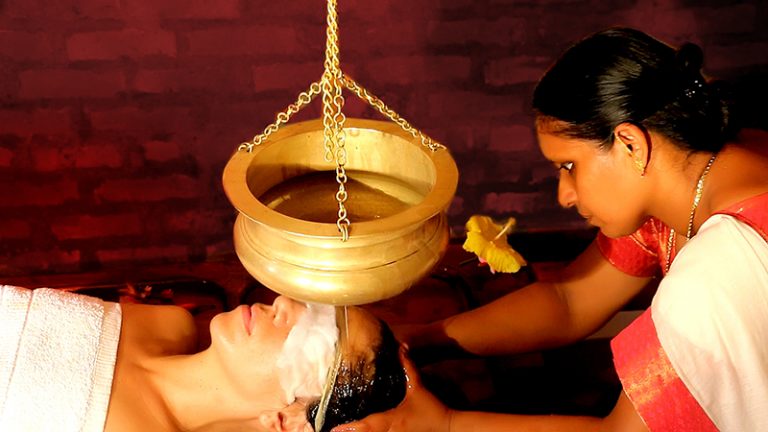
One of the most recognised therapies in Kerala Ayurveda, Shirodhara involves a continuous, gentle stream of warm medicated oil poured over the forehead — specifically over the third eye point — for an extended period.
The effect on the autonomic nervous system is measurable. Cortisol levels drop. Brainwave activity shifts. For someone whose nervous system has been chronically dysregulated by substance use, this is not a luxury treatment. It’s a recalibration.
Herbal Medicine — Specific, Not Generic
Ayurvedic herbal formulations used in de-addiction are targeted. Brahmi and Shankhapushpi address neurological repair and cognitive clarity. Ashwagandha rebuilds Ojas and manages withdrawal-related anxiety. Guduchi supports liver function. Specific formulations are adjusted based on individual constitution (Prakriti) and the nature of the addiction — alcohol, tobacco, opioids, and cannabis each create different doshic disturbances that require different approaches.
This individualisation is something that distinguishes Ayurveda Treatment in Munnar from more standardised detox protocols. No two patients receive identical treatment plans.
Is Ayurvedic Treatment Effective for Alcohol Addiction Specifically?
Alcohol addiction creates particular damage — to the liver, to Agni (digestive fire), to the emotional body through suppressed grief and unprocessed anxiety that the alcohol was managing. The withdrawal from alcohol can also be medically dangerous, which is why reputable centres work in coordination with medical oversight during the acute phase.
Once stabilised, Ayurvedic intervention becomes highly relevant. Liver-supportive herbs like Kalmegh and Punarnava begin the process of hepatic restoration. Panchakarma therapies address the toxic load in the body’s deep tissues. And crucially — yoga, pranayama, and counselling begin working on the psychological drivers that made alcohol feel necessary in the first place.
The honest answer is that Ayurveda is particularly effective in the post-acute and rehabilitation phases of alcohol addiction. For someone who has cleared the acute withdrawal medically and is now trying to rebuild — physically, emotionally, cognitively — an Ayurvedic De-Addiction Centre in Munnar offers a level of integrated restoration that is difficult to find elsewhere.
Yoga, Pranayama, and What They Actually Address
Recovery literature often lists yoga as a helpful addition. That undersells it considerably.
The specific practices used in Detoxification treatment in Kerala de-addiction programmes aren’t general fitness yoga. Pranayama techniques like Nadi Shodhana (alternate nostril breathing) directly regulate the autonomic nervous system. Yoga Nidra, a guided state between waking and sleep, gives the brain extended periods of deep rest it may not have experienced in years. Practices targeting the manipura chakra (solar plexus) address the shame and powerlessness that sit at the psychological core of addiction for many people.
These aren’t metaphors. The physiological mechanisms are real — breath regulation affects heart rate variability, which is a measurable marker of nervous system health and resilience to stress. Restoring that resilience is central to preventing relapse.
Diet During Treatment — And Why It Matters More Than Expected
Ayurveda Treatment in Kerala tradition holds that food is medicine — and in de-addiction treatment, this isn’t a philosophical position, it’s a practical one.
The digestive system in someone recovering from long-term substance use is compromised. Agni is weakened. Nutrient absorption is impaired. The standard recommendation is a sattvic diet — warm, freshly cooked, easily digestible foods that don’t tax the system while it heals. Think lightly spiced rice and lentil preparations, cooked vegetables, warm herbal teas, minimal raw food until digestion strengthens.
Foods that increase Rajas (restlessness, agitation) or Tamas (lethargy, dullness) are reduced — which means less caffeine, less heavily processed food, less meat during the treatment phase. The reasoning is that mental clarity is a prerequisite for the psychological work of recovery, and diet directly shapes the quality of the mind according to Ayurvedic thinking.
The Question Nobody Usually Asks: What Happens After?
The most important predictor of long-term recovery isn’t how good the treatment centre is. It’s whether the person leaves with sustainable practices they can actually maintain.
The best centres send patients home with a personalised routine — specific herbs to continue, morning practices, dietary guidelines adjusted for their constitution and daily life. This is the concept of Dinacharya: daily rhythm as medicine. Maintaining that rhythm is not glamorous. It doesn’t feel transformative on a Tuesday morning. But it works, quietly and cumulatively, in the background.
FAQ
What addictions can Ayurveda help treat?
Ayurveda has documented applications for alcohol dependence, tobacco and nicotine addiction, cannabis use, prescription medication dependency, and behavioural addictions. The approach focuses on the individual’s constitution and the specific doshic imbalances created by each substance, rather than a one-size treatment for all addictions.
What is the role of Panchakarma in de-addiction treatment?
Panchakarma serves as the deep purification phase of treatment. It removes accumulated toxins from tissues, restores organ function (particularly liver and nervous system), and clears the physiological residue of long-term substance use. It works best once the acute withdrawal phase has passed and the body is stable enough to undergo the therapies.
How does yoga support addiction recovery?
Yoga addresses the nervous system dysregulation that underlies both addiction and relapse. Specific practices restore heart rate variability, reduce cortisol, improve sleep quality, and develop the capacity to tolerate discomfort without reaching for a substance — which is, functionally, the core skill that recovery requires.
What diet is recommended during de-addiction treatment?
A warm, freshly cooked, easily digestible sattvic diet — built around whole grains, lentils, cooked vegetables, and herbal preparations. Caffeine, heavily spiced foods, processed foods, and alcohol are eliminated. The goal is to support Agni (digestive fire) while the body heals and to create the mental clarity necessary for psychological work.
Can Ayurveda help with stress and anxiety caused by addiction?
Yes — and this is one of its clearest strengths. Adaptogenic herbs like Ashwagandha, Brahmi, and Jatamansi directly support the stress response system. Shirodhara and Abhyanga therapies calm the nervous system at a physiological level. Pranayama practices build the capacity to regulate emotional states. For many people, the anxiety that outlasts physical withdrawal is the most dangerous part of recovery — and Ayurveda has developed, over centuries, specific tools to address exactly this.
Recovery is rarely a single decision made once. It’s a direction chosen repeatedly, in different circumstances, with varying degrees of difficulty. What the right environment and the right support can do is make that direction easier to choose — by rebuilding the body and nervous system until it no longer fights the person trying to heal it.
That, more than any single therapy, is what an Ayurvedic De-Addiction Centre in Munnar offers. Not a cure administered from outside, but conditions under which genuine healing becomes possible from within.