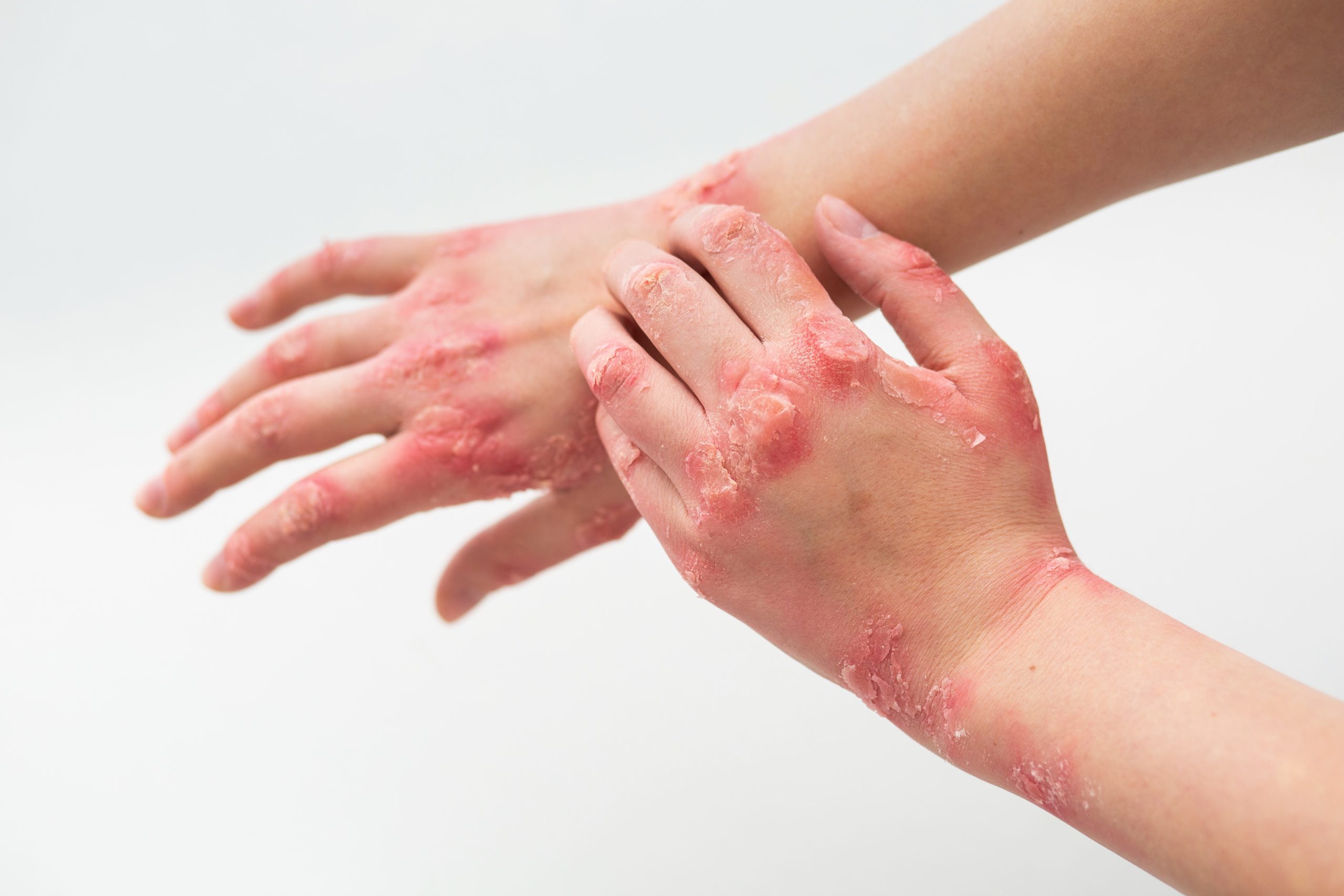
Psoriasis rarely behaves like a straightforward surface disorder. A plaque can look calmer while the disease remains active elsewhere; the scalp may settle while the elbows flare, or the skin may improve while joint stiffness quietly begins. Modern medicine describes psoriasis as a chronic immune-mediated disease influenced by genetic and environmental factors, with periods of flare and remission. Any credible Ayurveda Treatment for Psoriasis has to be discussed as management, not as a promise that the disease has been permanently removed.
Ayurvedic practice approaches comparable patterns under the broader discussion of Kushtha, with attention to dosha disturbance, digestion and metabolism, tissue involvement, bowel pattern, sleep, stress, climate, food habits and the character of the skin itself. A dry, thick, fissured plaque is not approached in the same way as hot, intensely red, burning skin. A person with stable plaques for ten years is not the same clinical proposition as someone whose disease became widespread after an infection or medication change.
Patients often arrive convinced that a particular food “caused” their psoriasis. Usually the story is less tidy. Stress, infections, skin trauma, alcohol, smoking, weather and some medicines can trigger or aggravate psoriasis, but no single trigger explains every case. Some people can identify a repeatable food-related flare; others spend months removing dairy, gluten, tomatoes, aubergine and half their normal diet without producing a meaningful change. The mistake is chasing purity rather than patterns.
Panchakarma can be useful, but only when the patient is suitable
Panchakarma attracts attention because it sounds decisive: cleanse first, then rebuild. In practice, the decision should be much less dramatic. Vamana and Virechana are classical purification procedures used in selected Ayurvedic approaches to chronic skin disease, and small studies and case reports have described improvement in psoriasis. The evidence is still limited, with much of the published literature consisting of small studies and case reports rather than large, rigorous trials. That distinction should not be softened.
A structured course of Ayurvedic Panchakarma Munnar may be appropriate for a medically stable patient whose strength, bowel function, age, season and disease pattern support it. It is not a default package for every person who has plaques. Repeated purgation in a thin, dehydrated patient with poor appetite is poor judgement. Therapeutic emesis is not something to improvise at home. Strong cleansing procedures may also be unsuitable in pregnancy, marked weakness, significant dehydration or unstable illness.
Patients underestimate the preparation and recovery around purification. Food is simplified. Digestion is watched. Sleep and bowel movements are observed. A patient who completes purification and immediately returns to alcohol, irregular meals, night shifts and frequent takeaway food should not be surprised if the skin relapses.
The phrase Detoxification treatment in Kerala is often used loosely. In Ayurveda, shodhana has a specific therapeutic context; it should not be confused with a spa cleanse, juice fast or generic “toxin removal” claim. There is no laboratory test showing that a Panchakarma course has removed the immunological basis of psoriasis.
External therapies help the skin, but they cannot carry the whole treatment
Abhyanga is often recommended because oil reduces dryness, softens scale and makes tight skin feel more comfortable. That can be useful..
When plaques are dry, stable and heavily scaling, a properly selected medicated oil may reduce cracking and irritation. When lesions are acutely inflamed, hot, oozing, infected or extremely sensitive, heavy oil massage can feel unbearable and may aggravate discomfort. Vigorous rubbing is particularly unhelpful because skin injury itself can provoke psoriasis in susceptible patients.
The same caution applies to herbal pastes and powders. “Natural” does not mean non-irritant. A paste that stings, burns or leaves the skin markedly red is not working harder; it may simply be irritating an already compromised skin barrier.
Takradhara, selected oil applications, gentle bathing procedures and local treatments are sometimes used as part of Ayurveda Treatment for Psoriasis, but the therapy should follow the skin state rather than the popularity of the treatment name. There are patients who need less touching, not more.
Swedana needs judgement. Mild, controlled fomentation may be used after oleation in some Panchakarma sequences. Someone with burning plaques, marked heat intolerance or an active inflammatory flare may come out more uncomfortable. Prolonged sweating also dries some skins once the sweat evaporates. Steam is not automatically anti-inflammatory.
Itching deserves separate attention. Cooling applications, emollient-style oils and reduced friction may help, but persistent itch often reflects active inflammation. Scratching at night, then compensating with more oil the next morning, is a common cycle. Short nails, breathable clothing, a cooler bedroom and avoiding harsh soap are unglamorous details, yet they often matter.
Expecting external therapy to control the whole disease is a common misjudgement. An oil can soften a plaque. It cannot be assumed to switch off the immune activity that produces psoriasis.
Internal medicines and diet are where careless treatment causes trouble
Patients tend to remember the massage and forget the prescription. In chronic psoriasis, internal medicines and daily habits may influence the plan more than any single therapy session.
Ayurvedic physicians may select herbal or classical formulations according to the presentation. The choice should not be copied from a friend, bought online because the label says “skin detox”, or continued indefinitely without review. Treatment changes should be coordinated with the clinician who prescribed them. Psoriasis involving joints, nails, extensive body surface area, the face or genitals may need a very different level of medical oversight from a few stable plaques on the knees. Established medical treatment itself varies considerably according to psoriasis type, severity and location. Diet is another area where enthusiasm regularly outruns judgement.
It should be specific enough to be useful and flexible enough to live with. Regular meals, adequate protein, vegetables, sensible hydration and reducing a clearly repeatable trigger make more sense than an expanding blacklist. Alcohol is worth discussing frankly because frequent or heavy drinking can aggravate psoriasis and may interfere with treatment response.
Patients sometimes reach an Ayurveda centre after several months of eating an unnecessarily narrow diet. No dairy. No wheat. No nightshades. No fermented food. No pulses. Very little oil. Almost nothing enjoyable.
The psoriasis is still there, but now the patient is tired, losing weight and frightened of food. A strict diet can fail for a simple reason: nobody can sustain it.
Good psoriasis care knows when not to push Ayurveda further
The best Ayurveda Treatment for Psoriasis is sometimes an integrated plan rather than an exclusively Ayurvedic one. That is not a compromise in standards. It is good clinical sense.
Generalised pustular psoriasis, erythroderma, fever with rapidly worsening skin, dehydration, widespread skin pain, signs of infection, new eye symptoms, or significant joint swelling and stiffness are not situations for casually extending a retreat programme. Psoriatic arthritis can damage joints, and the condition may require specialist assessment and systemic treatment.
There are quieter warning signs too. A person losing weight because the prescribed diet has become too restrictive. A patient becoming weak after repeated unsupervised cleansing. Someone applying multiple herbal products to cracked skin and developing contact dermatitis on top of psoriasis.
A traveller who cannot tell the doctor what is in powders brought from another clinic. Those situations are more clinically revealing than a before-and-after photograph.
This is where experienced Ayurveda Treatment in Munnar should differ from wellness tourism. The treatment should be adjusted when the skin is not behaving as expected. Sometimes Abhyanga is paused. Sometimes Swedana is reduced. Sometimes purification is postponed. Sometimes the sensible decision is to continue the dermatologist’s medicine while Ayurvedic care concentrates on sleep, stress, bowel regularity, diet, skin comfort and carefully selected supportive therapies.
Patients sometimes interpret a flare during treatment as evidence that “toxins are coming out”. That explanation should not be used automatically. A worsening rash may be a disease flare. It may be irritation. It may be a reaction to an oil or medicine. It may be infection. It may have nothing to do with the Ayurvedic treatment at all.
A worsening patient needs reassessment, not a more imaginative explanation.
Ishani Ayurveda Yoga Heritage in Kunjithanny, Munnar describes its work as doctor-supervised traditional Ayurvedic care with Panchakarma facilities. For a psoriasis patient travelling from overseas, that supervision matters more than the number of therapies listed on a package.
FAQs
1. What are the best Ayurvedic therapies for psoriasis?
Yes. Panchakarma, medicated oil therapies, internal Ayurvedic medicines, dietary correction and lifestyle management may help reduce psoriasis symptoms. The exact combination should be selected after consultation.
2. Which Ayurvedic treatment is most effective for chronic psoriasis?
Yes. A personalised programme combining Panchakarma, internal medicines and supportive external therapies may help manage chronic psoriasis and reduce recurring flare-ups.
3. Is Panchakarma effective for managing psoriasis naturally?
Yes. Panchakarma may support natural psoriasis management by addressing individual dosha imbalance and improving overall metabolic and digestive balance. Suitability should be assessed by an Ayurvedic physician.
4. Can Ayurvedic therapies help reduce itching and skin inflammation?
Yes. Appropriately selected Ayurvedic medicines and external therapies may help reduce itching, dryness, scaling and skin discomfort.
5. Are Ayurvedic therapies suitable for all types of psoriasis?
Yes. Ayurvedic care can be considered for different types of psoriasis, but the therapies used must vary according to the type, severity and overall health of the patient.
6. What causes psoriasis according to Ayurveda?
Ayurveda associates psoriasis-like conditions with dosha imbalance, disturbed Agni, altered metabolism and unsuitable dietary or lifestyle habits. Treatment is planned according to the individual presentation.
7. Is there a permanent Ayurvedic solution for psoriasis?
Yes, Ayurveda may help achieve long-term symptom control and longer periods of remission in suitable patients. A permanent cure cannot be guaranteed because psoriasis is a chronic condition and recurrence varies between individuals.
8. Can Ayurvedic detox therapies improve psoriasis symptoms?
Yes. Properly supervised Ayurvedic detoxification therapies may help reduce symptom intensity and support better disease management when they are suitable for the patient.
9. Is Abhyanga therapy recommended for psoriasis?
Yes. Abhyanga with appropriately selected medicated oils may help reduce dryness, scaling and skin discomfort. It may not be suitable during certain acute or highly inflamed stages.
10. How does Swedana therapy help psoriasis patients?
Yes. Mild, carefully supervised Swedana may support selected psoriasis treatment programmes by improving circulation and preparing the body for other Ayurvedic procedures. It should only be used when appropriate for the patient’s condition.
Disclaimer: Ayurvedic treatment responses can differ considerably from person to person because psoriasis type, body constitution, disease severity, medical history, current medicines and overall health are not the same in every patient. Panchakarma, Abhyanga, Swedana, internal medicines or other therapies should therefore be selected only after a proper consultation and individual assessment by a qualified Ayurvedic physician. Patients with severe, rapidly worsening or joint-related psoriasis should also seek appropriate medical evaluation.